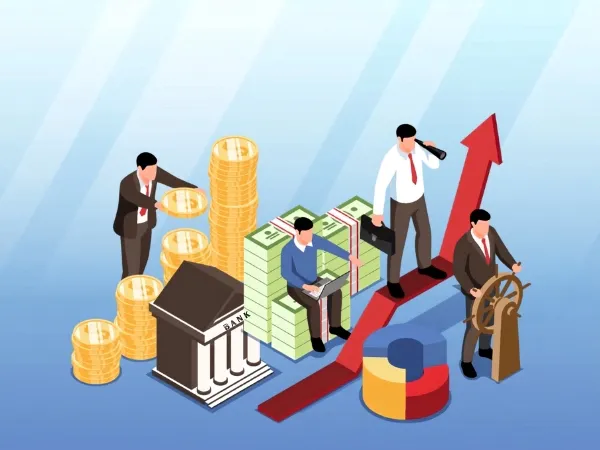
Moving from a "business idea" to a "real business" requires one main thing: Capital. If you are new to the world of business, the word "capital" might sound like fancy office talk. But it’s actually a very simple concept. Business capital includes all resources that are required to start business, keep it steady and grow it over time.
What is Capital?
Capital includes resources that company uses for its growth and operational activities. In day-to-day language, we call it money but in business terms, we call it Capital. Capital is the money you invest in the business to make more money later. It’s the fuel that keeps the business engine running.
Let’s suppose, if you buy a car for personal use, that’s just a purchase and if you buy a car for commercial use and to earn more money from it, that car is now capital for your business.
Types of Capital
There are different kinds of capital in a business. Let's look at the most common types below:
1. Equity Capital
It is also known as the “Owner’s Money”. This is the money that comes from your own pocket or from partners. In return, the investor gets profit over the equity capital. Equity capital remains permanent part of financial structure of an entity.
E.g., if a company issues 50,000 shares of Rs.10 each then the equity capital of the company is Rs. 5,00,000.
2. Debt Capital
This is also known as “the borrowed money”. This is the money you get from a financial institutions like banks, NBFCs, etc. debt capital can be raised in form of term loans, working capital limits, Bonds, Commercial Paper etc.
E.g., if the company raises Rs. 5,00,00,000 from bank then its equity doesn’t get diluted but the company has to pay a fix obligation in form of interest at regular intervals.
3. Working Capital
It is also known as “the daily money”. Working capital represents funds available for day‑to‑day operational expenses like electricity, rent, and staff salaries.
4. Fixed capital
Fixed capital refers to long-term assets that a business buys to produce or provide services. These assets are not used for daily transaction but are essential for the production process. For example, investment in building structure, plant & machineries, furniture and fixtures.
Difference between working capital and fixed capital
- Human capital: The collective skills and knowledge and experience of employees.
- Intellectual capital: Non-physical assets such as patents, copyrights, brand reputation/ good will.
Based on the time of introduction, it may further be classified into:
- Seed capital: Initial equity funding for business idea, prototype or research.
- Growth capital: for scaling distribution, increasing operations.
Why Capital Matters for Your Business Growth?
Capital is the backbone of every business and plays a key role in the success of every small to big business, from financing your daily operations.
Every business reaches a stage where growth depends on how much it can invest back into itself. This comes with investment capital, which also lets you upgrade systems, discover new products, and expand your reach without the stress of daily operations.
Capital not only strengthens the foundation of your business, it also ensures you have enough money to handle unexpected expenses, maintain operations during times of low revenue, and plan with confidence. With adequate capital, growth becomes a strategic choice, not a struggle against limited resources. Strong capital management also enables you to plan and take advantage of opportunities when they arise, rather than waiting for the “right time.”
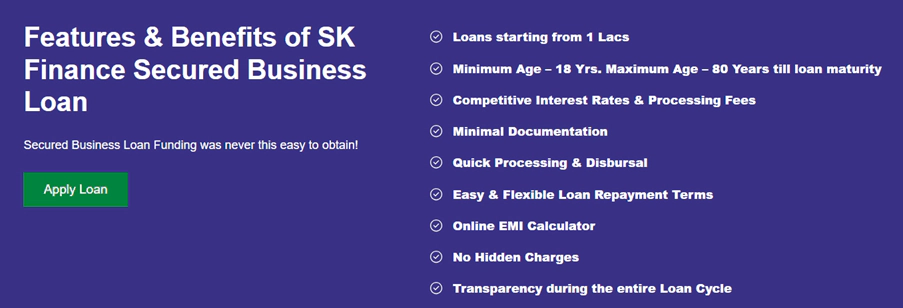
And if you're planning to take your next step, SK Finance can help you do that. It offers business loans with flexible terms, quick processing and rates designed to support your growth journey.
Conclusion
Capital is the backbone of every business and plays a significant role in the success of each step of all types of businesses, starting from daily operating expenses to business expansion. The Capital not only strengthens the foundation of your business, it also ensures you have enough money to handle unexpected expenses, maintain operations during hard times such as low revenue, etc.
To support your growth journey, SK Finance provides Secured Business Loan with the best competitive interest rates.
You can visit our SK nearest branch today and choose the ideal financial partner for your growth.
Disclaimer
The information provided in this blog is for general awareness and informational purposes only. For complete details regarding our products and services, please visit the nearest branch.