Whether your business is big or small, steady cash flow is essential for survival and growth. A business loan can support business expansion plans, working capital needs, equipment purchases, or other business goals. But before applying, it is important to understand which loan type best matches your funding requirement and repayment capacity.
Depending on your available assets and immediate cash requirements, business loans generally fall into two categories: secured and unsecured. During the lender's assessment process, factors such as repayment capacity, documentation, business profile, and collateral value are evaluated before loan terms are determined.
Understanding the difference between secured and unsecured loans can help borrowers make a more informed financing decision.
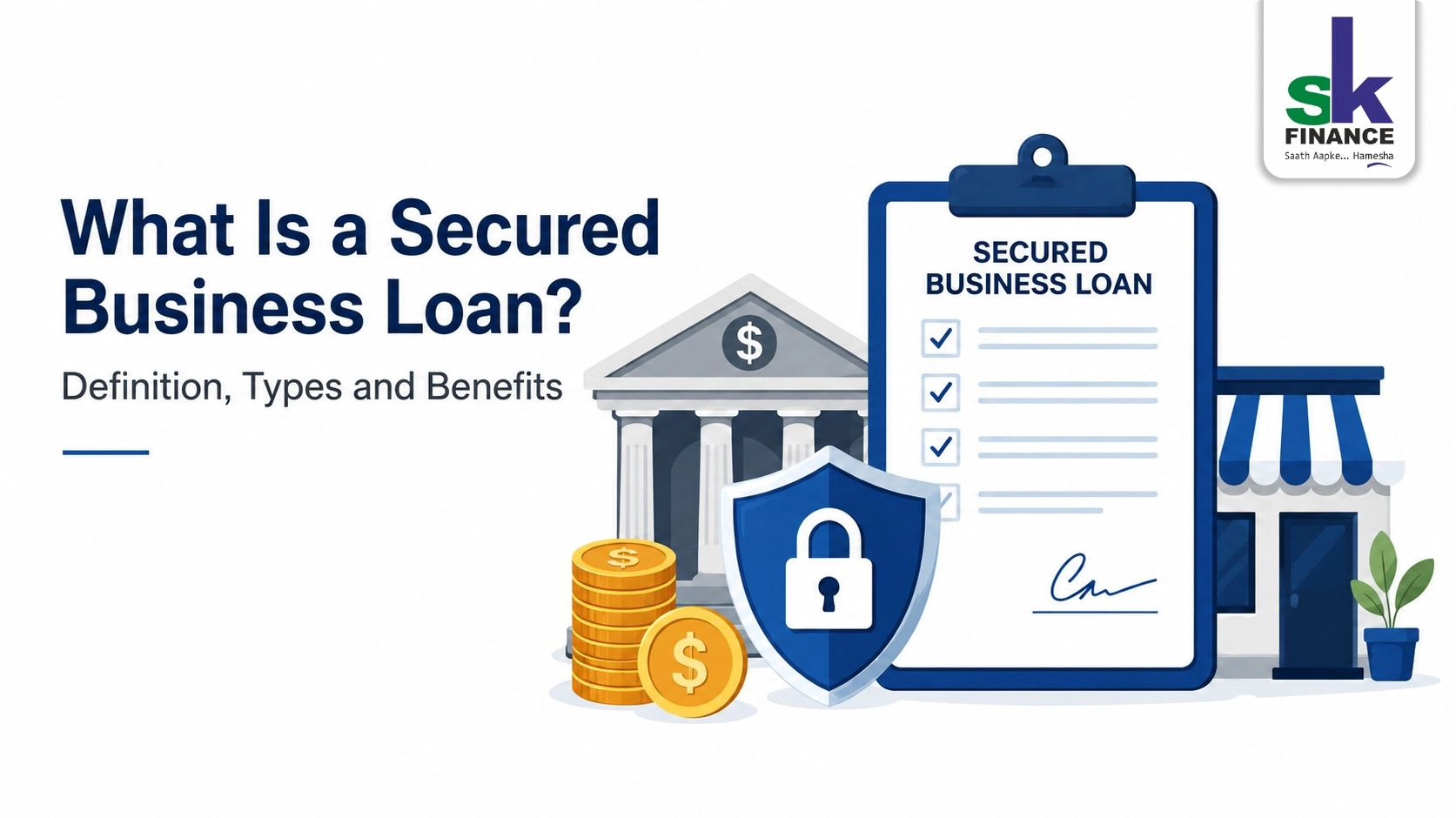
What is a Secured Business Loan?
A secured business loan is a loan in which you pledge an eligible asset as collateral to access funds for business needs. The collateral may include property, machinery, equipment, inventory, receivables, vehicles, or other approved business assets. For small businesses in rural and semi-urban areas, such loans may help unlock funds from owned assets while supporting growth, working capital, or asset purchase, subject to the lender's terms.
Before choosing a secured business loan, it is essential to understand how each option works, what asset is pledged, and which business need it usually supports.
Types of Secured Business Loans in India
It is available in different forms, depending on the type of asset pledged and the borrower’s funding requirement:
- Loan Against Property:
This option allows you to avail funding by mortgaging an immovable asset such as residential, commercial, or industrial property. It is a form of secured business loan and may be suitable for businesses that own eligible property and need funds for expansion, working capital, or other business purposes.
- Equipment Financing:
This helps you purchase machinery, equipment, tools or commercial vehicles without paying the full cost upfront.
- Loan Against Business Assets:
This loan helps businesses access funds by pledging eligible movable or immovable business assets, such as commercial vehicles, heavy machinery, unpaid invoices, or inventory, as collateral.
- Inventory Financing:
Inventory financing uses eligible inventory or stock as security for obtaining business funding. Retailers, wholesalers, distributors, and seasonal businesses can use it to maintain inventory levels during high-demand periods.
Key Features and Benefits of Secured Business Loans
- Access to funding against eligible assets such as property, equipment, machinery, inventory, receivables, vehicles, or other approved business assets.
- Loan amount and terms may be influenced by collateral type, asset valuation, ownership verification, business profile, repayment capacity, documentation, and lender policies.
- Useful for business expansion, working capital, equipment purchase, inventory management, or other approved business funding needs, subject to lender assessment.
What is an Unsecured Business Loan?
An unsecured business loan does not require collateral and is usually assessed based on factors such as business income, bank statements, credit history, repayment capacity, and lender policies. For example, a small business owner may take an unsecured loan to manage short-term working capital needs.
Difference Between Secured and Unsecured Business Loan
To pick the right path, it helps to compare secured loans with unsecured options, which rely mainly on the borrower’s credit profile, financial records, repayment capacity, and the lender’s assessment.
Factor | Secured Business Loan | Unsecured Business Loan |
|---|---|---|
Collateral Requirement | Required | Not required |
Risk Profile | Lower lender risk due to collateral backing | Higher lender risk |
Loan Amount Flexibility | May be influenced by collateral value | Based largely on borrower profile |
Documentation Depth | Includes collateral-related documents and income records | Focuses primarily on business and financial records |
Lender’s Assessment Approach | Includes asset valuation and underwriting process | Primarily evaluates financial strength and repayment capacity |
Read More: - Secured vs. Unsecured Business Loan - What’s the Difference?
Things to Know Before Applying for a Secured Business Loan
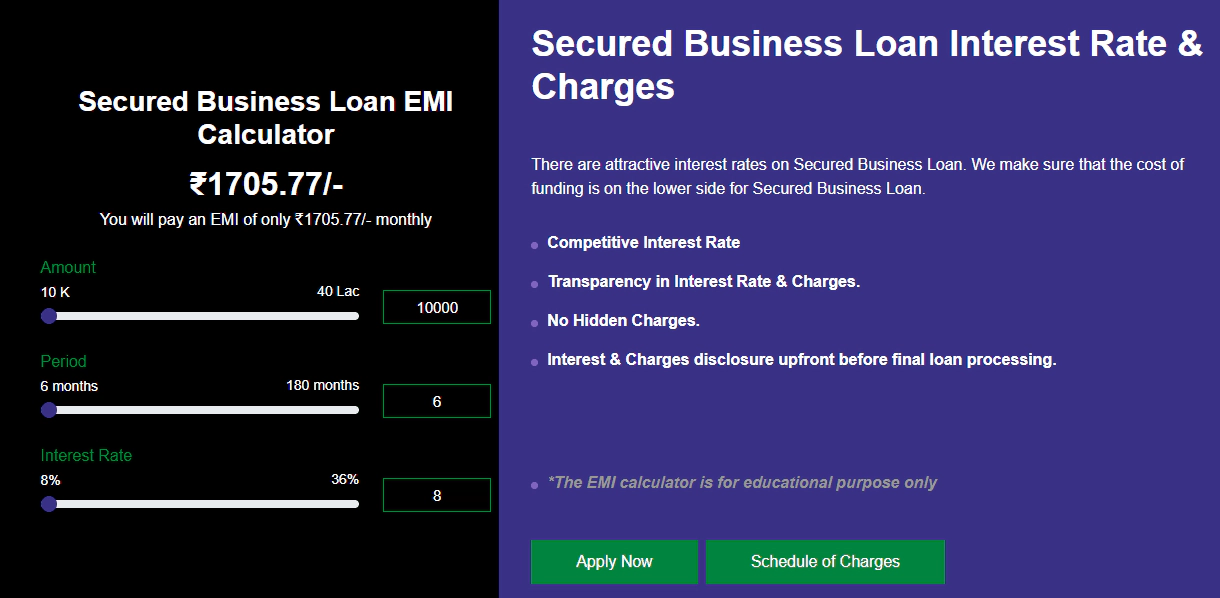
Secured business loan charges refer to the fees and expenses associated with processing, documentation, verification, valuation, and administration of the loan. The applicable charges may vary across lenders and loan products.
Depending on the lender and loan structure, Secured business loan charges can include:
- Processing charges
- Documentation charges
- Legal verification expenses
- Asset valuation expenses
- Administrative charges disclosed by the lender
How to Apply for a Secured Business Loan?
Applying for a secured business loan involves assessing funding needs, identifying collateral, preparing documents, completing lender verification, and reviewing sanction terms carefully before acceptance.
1. Assess Business Funding Need
Determine why financing is required and estimate the amount needed based on business objectives.
2. Identify Collateral
Identify eligible property, equipment, inventory, or other acceptable assets that may be offered as collateral.
3. Prepare Financial Documents
Common secured business loan documents include:
- Business registration documents
- Identity and address proof
- Financial statements
- Bank statements
- Income-related records
- Asset ownership documents
- Tax-related documents as required
4. Submit Application and Verification Details
Provide business information, collateral details, and supporting documentation for lender review.
5. Review Sanction Terms Before Acceptance
Carefully review all loan terms, repayment obligations, charges, conditions, and legal documentation before proceeding.
Furthermore, choosing a lender that provides quick loan approvals ensures that businesses can access capital exactly when they need it, without long and painful wait times. Businesses seeking secured business loans may explore mortgage loan options offered by SK Finance.
SK Finance provides secured lending solutions where eligible property may be pledged as collateral for your business funding needs, subject to documentation, property valuation, legal verification, repayment capacity, lender assessment, and applicable eligibility criteria.
A secured business loan can be a practical option when a business has eligible collateral and needs funds for growth, working capital, or asset purchase, especially for enterprises operating in rural and semi-urban markets. Before applying, borrowers should compare loan terms and understand all applicable charges.
We offer convenient Support features such as Minimal documentation, Eligibility assistance & Apply via WhatsApp in 5 minutes. For people exploring accessible financing across vehicle and equipment categories, SK Finance offers multiple loan solutions designed for practical financing needs.
Disclaimer
The information provided in this blog is for general awareness and informational purposes only. For complete details regarding our products and services, please visit the nearest branch.