

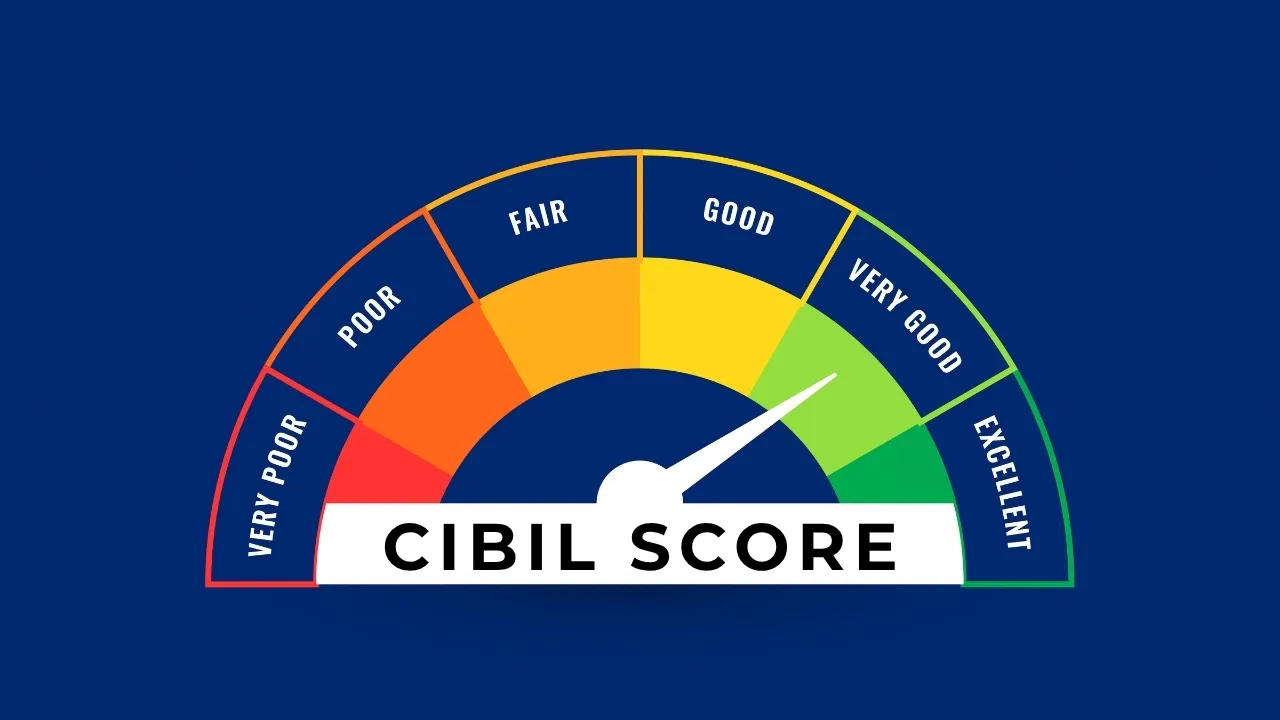
You can check your Cibil score online through CIBIL's official consumer service. Eligible consumers can access one free Cibil score and report once every calendar year. Your CIBIL report also helps you review repayment history, active and closed credit accounts and lender enquiries before applying for new credit.
For a Cibil score check online free, use the official CIBIL site and follow its current registration and identity-verification process. Checking your own score does not negatively affect the score.
What is CIBIL Score?
A CIBIL Score is a three-digit numerical summary of an individual's credit history, ranging from 300 to 900. It is derived from information contained in the individual's CIBIL Report and is used by lenders as one input when evaluating credit applications.
CIBIL Score Full Form
CIBIL stands for Credit Information Bureau (India) Limited. CIBIL is a credit information company that maintains credit information received from banks and financial institutions and provides CIBIL Scores and Reports based on that information.
What Does a CIBIL Score Represent?
Your Cibil score represents aspects of your credit history and repayment behaviour. The score is generated from information in areas such as credit accounts and enquiries reported to CIBIL.
A score closer to 900 generally indicates a stronger credit profile and can improve the chances of a loan application being considered favourably. However, the score alone does not determine whether credit will be approved.
Fast, Simple, Minimal Documentation
Why Lenders Check CIBIL Score Before Loan Approval?
Lenders check the CIBIL Score and Report to assess an applicant's credit history and repayment behaviour as part of the loan evaluation process. A higher score can improve the chances of the application being reviewed favourably, but lenders may consider other factors before making a lending decision.
CIBIL itself does not approve or reject a loan. The final lending decision rests with the lender according to its applicable credit policy and assessment criteria
Step-by-Step Process to Check Your CIBIL Score Online
Checking your Cibil score check online is straightforward when you use the official CIBIL website. Follow these steps to access your score and review the information that lenders may consider while evaluating your credit profile:
- Visit the Official CIBIL Website
Go to the official CIBIL website and access the consumer section for the Free CIBIL Score and Report. CIBIL currently provides eligible consumers with one free Score and Report every calendar year. - Register With PAN & Personal Details
Enter the personal information requested during registration, along with the applicable identifier, such as PAN. The exact information required is determined by CIBIL's current registration and authentication process. - Complete Identity Verification
Complete the system-generated authentication process to verify your identity. If online authentication is unsuccessful, CIBIL provides an alternative customer-support process for completing identity verification. - Access Your Free CIBIL Score & Report
After successful verification, access your CIBIL Score and Report through your account. The free annual report includes your latest three-digit CIBIL Score and information relating to your credit history. - Review Credit Details and Repayment History
Do not stop at the score. Review your credit accounts, repayment information and enquiries for inaccuracies or unfamiliar activity. If you identify an error, CIBIL provides an online dispute-resolution process for eligible discrepancies.
Important: Checking your own CIBIL Score does not negatively affect your score, so reviewing your report before applying for credit is a useful way to understand your current credit position.
CIBIL Score Range Explained 2026
The CIBIL score range is 300 to 900. A score closer to 900 generally represents a stronger credit profile, but there is no single CIBIL score that guarantees loan approval across every lender or loan product.
| CIBIL Score Range | Category | Loan Approval Chances |
| 300–549 | Lower score range | May require closer credit assessment |
| 550–649 | Moderate score range | Approval depends strongly on lender assessment |
| 650–699 | Improving credit profile | May be considered depending on lender criteria |
| 700–749 | Generally good range | Generally stronger profile, subject to other criteria |
| 750–900 | Higher score range | Generally stronger chances, but approval is not guaranteed |
These ranges are presented as general interpretive bands, not official CIBIL approval categories. CIBIL states that the closer a score is to 900, the higher the chances of loan or credit-card approval, while the lending decision remains with the lender.
How is a CIBIL score calculated?
Your Cibil score is calculated from information in your CIBIL credit report. It reflects patterns in your credit history, including repayment behaviour, credit utilisation, the type and duration of credit accounts, and recent credit enquiries. The exact scoring algorithm is proprietary, so fixed percentage weights should not be presented as official CIBIL rules.
Your credit report contains information supplied by credit institutions. Changes in reported account information can therefore influence the information used in your score calculation.
Key factors include:
- Payment history: Repaying EMIs and credit-card dues on time supports a healthier credit profile.
- Credit utilisation: The amount of revolving credit you use relative to your available limit is relevant to your credit profile.
- Credit history: The nature and duration of your credit accounts form part of the information considered.
- Credit mix: Your experience across different types of credit can contribute to the overall profile.
- Credit enquiries: Applications for new credit can generate lender enquiries recorded in your credit report.
There is no legitimate formula that lets you calculate your exact CIBIL Score manually. The score is generated using CIBIL's proprietary methodology from the credit information available to it.
Why Should You Check Your CIBIL Score Before Applying for a Loan?
Checking your Cibil score before submitting a loan application gives you a clearer view of your credit profile and allows you to identify potential issues before a lender evaluates your application. CIBIL itself recommends regular monitoring to help consumers identify errors and stay informed about their credit health.
1. Understand Loan Eligibility
Your CIBIL Score is one factor lenders may consider when assessing a loan application. Checking it beforehand helps you understand where your credit profile currently stands, although the score alone does not determine whether a lender will approve a loan.
2. Identify Reporting Errors
Reviewing your CIBIL Report can help you spot inaccurate account information, incorrect repayment details, or inquiries that you do not recognize. If you find an inaccuracy, you can raise a dispute through the applicable CIBIL process.
3. Improve Credit Readiness
Checking your report before applying allows you to address genuine credit-report issues and maintain responsible repayment behaviour. This is particularly useful when you are preparing for a significant borrowing decision.
4. Monitor Credit Behaviour
Regularly reviewing your Cibil score check results and credit report helps you remain aware of changes in your credit profile. It can also help you identify unfamiliar activity or potential identity-theft concerns at an earlier stage. CIBIL recommends periodic monitoring and confirms that checking your own score does not affect it.
How to Improve CIBIL Score?
The practical way to how to improve CIBIL score is to maintain consistent, responsible credit behaviour over time. There is no guaranteed shortcut that can increase a score by a fixed number of points within a specific period.
Reviewing your credit report regularly can also help identify inaccurate account information or unfamiliar enquiries that may need attention.
Read More: How to Improve Your CIBIL Score for Loan Approval?
1. Pay EMIs and Credit Card Bills on Time
Timely repayment is one of the most important habits for maintaining a healthy credit profile. Pay loan EMIs and credit-card dues by their respective due dates and avoid allowing accounts to become overdue.
A single payment does not guarantee a particular score movement. The effect of repayment behaviour depends on the broader credit history and information reported to CIBIL.
2. Reduce Credit Card Utilization
Avoid consistently using a very high proportion of your available revolving credit. Lower credit utilisation is generally viewed more favourably than repeatedly carrying balances close to the available limit.
There is no universal utilisation percentage that guarantees a particular CIBIL Score. The objective should be responsible use of available credit rather than borrowing solely to manipulate a score.
3. Avoid Multiple Loan Applications
Submitting several credit applications within a short period can result in multiple lender enquiries appearing on your credit report. Frequent applications may indicate increased credit-seeking activity and can affect your credit profile.
However, checking your own CIBIL Score is different. A Cibil score check by you does not negatively affect your score. You should not avoid checking your own report because of this misconception.
4. Maintain a Balanced Credit Profile
A balanced credit profile involves responsible management of different types of credit rather than accumulating loans simply to build a score. Both secured and unsecured credit can form part of a credit history, but repayment discipline remains essential.
If your report contains information, you believe is inaccurate, review the relevant account details and use the appropriate dispute process. Legitimate negative information should not be presented as something that can simply be erased to improve a score.
Read More: How Credit Score Impacts Interest Rates for a Loan?
Get Vehicle Loan Options from SK Finance Limited
Customers exploring vehicle finance can review the loan options available from SK Finance Limited, subject to the applicable product terms, eligibility requirements and credit assessment.
Vehicle-loan availability and approval depend on the relevant lending criteria. A Cibil score can form part of that assessment, but it does not by itself guarantee approval, a particular loan amount or a specific interest rate.
For borrowers, checking their credit information before submitting a loan application can help them understand their existing credit position and identify discrepancies that may require correction.
Disclaimer
The information provided in this blog is for general awareness and informational purposes only. For complete details regarding our products and services, please visit the nearest branch.
SK Finance never asks customers to share OTPs, Pins, passwords or provide screen-sharing access through any communication channel.